How to Choose a Water Softener and Filter System?

Choosing a water softener and filter system should begin with evidence, not attractive claims. The U.S. Geological Survey explains that hard water mainly contains dissolved calcium and magnesium. It can leave white scale on faucets, cloudy shower glass, and stiff laundry. The Water Quality Association reports that roughly 85% of U.S. homes experience hard water. That figure deserves context, because hardness varies greatly by region and household.

“Test first, treat second,” advises Dr. Joseph Cotruvo, a recognized drinking-water quality expert and former EPA scientist. His principle is simple, but often ignored. A laboratory water test can reveal hardness, iron, chlorine, sediment, nitrate, or other concerns. The U.S. Environmental Protection Agency’s Consumer Confidence Reports also show why local water information matters. Municipal supplies and private wells do not present identical risks.

This guide will compare softeners, carbon filters, reverse-osmosis units, and combination systems. It will examine capacity, regeneration methods, salt use, maintenance, certification, and installation space. Look closely at NSF/ANSI standards. Certification does not mean a system removes every contaminant. It confirms performance for specific claims.

There is no perfect system. A household with scale may not need advanced filtration. A well with sulfur odor may need different treatment. Even published data can be misunderstood when water conditions change. The practical choice depends on tested water, household consumption, plumbing limits, and realistic maintenance. That is less glamorous than a one-box solution. It is also more reliable.
How to Choose a Water Softener and Filter System?

Water Quality Problems a Softener and Filter System Can Solve

Hard water often leaves white scale on faucets, shower doors, and heating elements.

It can also make soap feel sticky and leave laundry looking dull. A water softener reduces calcium and magnesium through ion exchange. This may protect pipes, improve lather, and reduce mineral deposits in appliances.

But a softener does not remove every contaminant. A separate filter may address sediment, chlorine taste, unpleasant odors, or visible particles.

Carbon filtration commonly improves taste and smell. Sediment filtration can catch sand and rust before they reach fixtures. If your water contains iron, sulfur, or specific contaminants, the system needs proper testing and suitable treatment media.

Test before choosing.

A laboratory report is more dependable than cloudy water or a metallic taste alone. Check hardness, pH, iron, manganese, chlorine, and bacteria when appropriate. Public water reports can provide useful background, while private wells require regular testing.

I have seen households buy oversized systems because every water problem was blamed on hardness. That mistake adds cost and maintenance. It also may not solve the real issue.

Consider daily water use, household size, regeneration settings, filter replacement costs, and available installation space.

A professional should verify flow rate and drainage requirements. Salt-based systems create wastewater and need routine salt replenishment.

Salt-free conditioners may reduce scale, but they do not truly soften water. No system is completely maintenance-free.

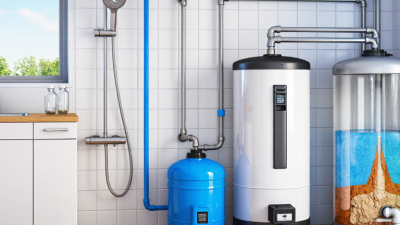
How Water Softeners and Filters Work

How to Choose a Water Softener and Filter System?

Water softeners and filters solve different problems. A softener reduces hardness minerals, mainly calcium and magnesium. It usually uses resin beads to exchange these minerals for sodium or potassium ions. The softened water feels smoother, and white scale appears less often on faucets and shower doors. However, softening does not make unsafe water safe to drink. It does not remove every contaminant.

Filters work through physical or chemical barriers. A sediment filter catches sand, rust, and visible particles. Carbon media can reduce chlorine, unpleasant odors, and some organic compounds. More advanced systems may use membranes, but their performance depends on water pressure and regular maintenance. A filter cartridge can look clean while its capacity is already exhausted. That detail is easy to miss.

Start with a laboratory water test. Check hardness, iron, manganese, pH, chlorine, and possible microbial concerns. Private wells need special attention. Match the system to household water use, not only pipe size. A unit that is too small may regenerate frequently, while an oversized unit can waste water and salt.

I once saw cloudy water blamed on hardness, although a failing sediment cartridge was the real cause. That mistake was expensive.

Keep records of installation dates and test results. Replace cartridges according to measured capacity, manufacturer guidance, or confirmed changes in water quality. A simple pressure gauge can reveal clogging before the shower becomes frustrating. Local plumbing rules may also affect installation.

Key Factors for Matching a System to Your Water

Choosing a water softener and filter system starts with testing, not guessing. Water hardness is measured as milligrams per liter of calcium carbonate. The USGS classifies water above 180 mg/L as very hard. This level can leave white scale on faucets, shorten appliance life, and make soap feel ineffective. A hardness test also reveals iron, manganese, pH, and dissolved solids. These details matter because one system rarely solves every water problem.

Public-water users should review their annual Consumer Confidence Report, as advised by the U.S. Environmental Protection Agency. Private-well owners need more frequent testing, especially after flooding or nearby construction. The CDC reports that about 15% of U.S. residents rely on private wells. That is a significant group with different risks. Carbon filtration may improve taste and chlorine odor. It will not reliably remove hardness. Ion exchange can reduce hardness, but it may add sodium and requires correct sizing. Reverse osmosis is more selective, yet it produces wastewater and usually serves one drinking tap.

Tips: Match capacity to household size, hardness, and daily water use. Check the regeneration setting, salt efficiency, drain requirements, and certification to relevant performance standards. Cheap test strips are useful for screening, but laboratory results are safer for final decisions. I would not choose equipment from a single number. Water chemistry can change, and that inconvenient fact is easy to ignore. A poorly matched system may waste salt, water, and money while leaving the original problem partly untouched. (Sources: USGS Water Hardness; EPA Consumer Confidence Reports; CDC Private Well Water.)

Comparing System Types, Features, and Operating Costs

Choosing a water softener and filter system requires comparing performance, maintenance, and lifetime cost. The U.S. Geological Survey classifies water above 180 mg/L as very hard, often causing scale on faucets, shower glass, and heating elements. Test your water first. A certified laboratory gives better evidence than a cheap strip.

Ion-exchange softeners remove hardness, while activated-carbon filters mainly reduce chlorine, odors, and some organic compounds. Reverse-osmosis units target dissolved contaminants but usually waste water and require more filter changes. Look for NSF/ANSI 44 certification for softeners and NSF/ANSI 42 or 53 certification for drinking-water filters. Certification does not mean every contaminant is removed.

Operating cost depends on salt use, regeneration frequency, replacement cartridges, wastewater, and electricity. A useful comparison is grains removed per pound of salt, not the purchase price alone. The U.S. Department of Energy reports that domestic water use averages about 82 gallons per person daily, so household size strongly affects capacity. A four-person home may regenerate far more often than a single occupant. Check actual meter readings. Manufacturers’ laboratory figures can look perfect, but real water chemistry is messier. Oversizing wastes money; undersizing brings hard-water spots back. A simple spreadsheet can expose the difference between a cheap installation and an expensive habit.

Installation, Maintenance, and Long-Term Performance Checks

Installation determines much of a system’s future performance. Measure hardness at the incoming line, not only at a kitchen tap. A certified water professional can check flow rate, pressure, iron, manganese, and pH before selecting equipment. Use NSF/ANSI 44 for softeners and NSF/ANSI 42 or 53 for filtration claims. Keep the drain line secured and install a bypass valve for servicing. Leave enough space to inspect the brine tank. Small mistakes become expensive leaks.

Maintenance should follow water conditions, not a convenient calendar. Check salt level monthly, but do not allow a solid salt bridge to hide an empty lower tank. Clean the brine tank when sludge or crust appears. Replace cartridges when pressure drops, taste changes, or the manufacturer’s capacity is reached. The CDC advises private-well owners to test their water at least annually. That test can reveal contamination a basic filter cannot address. It is easy to over-trust clear water.

Long-term checks need written records. Log hardness, regeneration frequency, pressure, salt use, cartridge changes, and laboratory results. A sudden rise in regeneration may indicate a valve problem or changing water demand. The U.S. Department of Energy reports that water heating represents about 18% of household energy use, so scale control can support equipment efficiency, although savings vary by water chemistry. Inspect fittings for white scale and dampness every few months. My practical concern is often overlooked: a well-maintained system may still be incorrectly sized. Recheck demand after renovations, guests, or a new irrigation connection.

How to Choose a Water Softener and Filter System? - Installation, Maintenance, and Long-Term Performance Checks

Decision Dimension Recommended Data or Option Typical Range or Standard Installation Considerations Maintenance and Performance Checks
Primary water problem Hardness, sediment, chlorine taste, iron, manganese, sulfur odor, or microbial contamination Confirm through a certified laboratory test or a reliable field test before selecting equipment Install treatment equipment only after identifying the contaminant and its concentration Repeat water testing at least annually, or sooner if taste, odor, color, or pressure changes
Water softener function Ion-exchange softener for calcium and magnesium hardness Hardness is commonly reported in mg/L as calcium carbonate or grains per gallon; 1 grain per gallon equals approximately 17.1 mg/L Install on the main cold-water line after the meter and before water heaters, unless local plumbing rules require another arrangement Check treated-water hardness monthly during the first three months, then every 3–6 months
Softener capacity Choose capacity based on household size, daily water use, and measured hardness A practical design estimate is 50–75 gallons per person per day; select reserve capacity for peak demand Avoid selecting solely by tank size; usable capacity depends on salt dose, regeneration settings, and water chemistry Monitor regeneration frequency; very frequent cycles may indicate undersizing, excessive water use, or incorrect settings
Peak flow rate The system should supply simultaneous fixtures without excessive pressure loss Many homes require approximately 8–15 gallons per minute, depending on the number of bathrooms and fixtures Match the inlet and outlet pipe size to the existing plumbing where possible; provide a bypass valve Measure pressure before and after treatment; investigate a pressure drop greater than approximately 15 psi under normal flow
Sediment filtration Sediment cartridge or reusable prefilter for sand, rust particles, and suspended solids Common nominal ratings include 5, 10, and 20 microns; finer ratings generally create greater pressure loss Place the sediment filter before carbon filters, softeners, and other sensitive components Replace or clean when pressure falls noticeably, water flow declines, or the cartridge becomes visibly loaded; many cartridges last about 3–6 months
Activated carbon filtration Reduction of chlorine taste and odor, selected organic compounds, and some sediment Performance depends on carbon type, contact time, flow rate, and contaminant concentration Install after sediment removal and size the unit for the required service flow and contact time Replace cartridges or media according to capacity, usage, or verified breakthrough; do not rely only on taste or odor
Iron and manganese Use an application-specific iron or manganese treatment rather than relying only on a standard softener Treatment selection depends on dissolved and oxidized concentrations, pH, alkalinity, and the presence of sulfur compounds Provide pretreatment, drainage, and adequate backwash flow when required by the media Test raw and treated water for iron and manganese; inspect for staining, odor, and media fouling
Salt and regeneration method Demand-initiated regeneration is generally more efficient than a fixed timer schedule Use salt formulated for water softeners and keep the brine tank sufficiently supplied without overfilling Provide a nearby drain connection with an air gap where required; protect the brine line from kinks Check salt level monthly, break up salt bridging, and clean the brine tank periodically when sediment or buildup is present
Drain and electrical requirements A reliable drain, overflow path, and grounded power supply may be required Drain flow and air-gap requirements vary by local plumbing code and equipment design Keep equipment level, protected from freezing, and accessible for service; install shutoff and bypass valves Inspect tubing, fittings, drain lines, and electrical connections for leaks, blockages, corrosion, or damage
Plumbing material and location Install in a dry, accessible area close to the point where water enters the building Avoid locations exposed to direct sunlight, temperatures below freezing, or standing water Keep enough clearance to remove cartridges, add salt, service valves, and inspect connections Check for leaks after installation and after every maintenance visit; inspect nearby floors and walls for moisture damage
Water use and efficiency Compare salt consumption, regeneration water, rated capacity, and expected service flow Actual consumption varies substantially with hardness, household demand, settings, and equipment condition Program hardness and household demand accurately; incorrect settings can increase salt and water use Record salt additions, regeneration events, and water-meter readings to identify unusual consumption
Drinking-water protection Use a separate drinking-water filter when specific contaminants require additional treatment Treatment must be matched to a verified contaminant; no single filter removes every water-quality problem Install point-of-use equipment at the kitchen tap or refrigerator when whole-house treatment is unnecessary Follow cartridge replacement intervals and verify performance with contaminant-specific testing when safety is involved
Long-term service life Longevity depends on water chemistry, installation quality, operating pressure, maintenance, and replacement of consumable parts Pressure vessels and control components commonly require service or replacement after many years; actual life varies by conditions Choose equipment with accessible parts, clear service instructions, and readily available replacement media or cartridges Review hardness, flow, pressure, leaks, salt use, and filter condition at least annually
Performance acceptance criteria Treated water should meet the intended treatment target without unacceptable pressure loss or excessive operating cost Compare results with the original test, applicable local requirements, and the equipment’s verified specifications Document installation date, initial readings, settings, filter type, and maintenance schedule Keep a service log containing water-test results, pressure readings, cartridge changes, salt use, and observed faults