Why Choose a Charcuterie Board Set for Your Business?
A Charcuterie Board Set can turn a simple spread into a more polished part of a business’s service. For caterers, restaurants, hotels, and event venues, presentation matters—but so do durability, ease of cleaning, and storage. A board with a stable base, comfortable handles, and well-matched serving tools can make setup smoother. Guests notice the details: neatly arranged cheeses, sliced fruit, crackers, and a knife placed within easy reach.
The right set depends on how it will be used. A busy venue may need sturdy materials that tolerate frequent handling, while a small café may value compact storage and a clean, versatile look. Check the product specifications, care instructions, and suitability for food contact before buying. These details are easy to overlook. Still, a board set alone cannot guarantee a memorable experience; thoughtful portioning, fresh ingredients, and careful upkeep matter just as much. Some sets may also need more maintenance than a business expects. That deserves consideration. By weighing appearance against practical needs, businesses can choose serving pieces that support their style without adding unnecessary work.
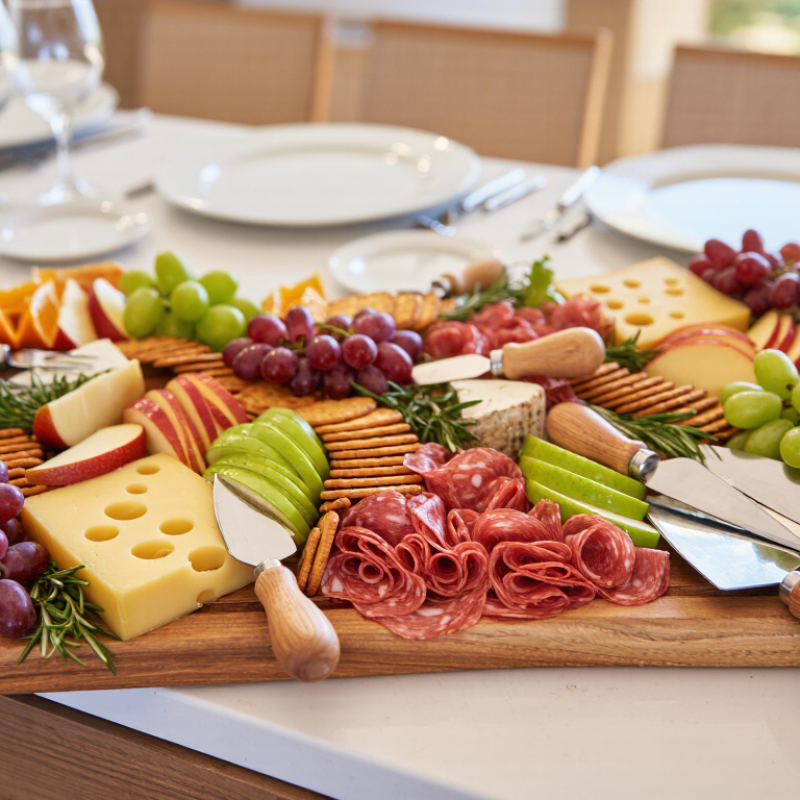
Understanding the Role of Charcuterie Board Sets in Business
A charcuterie board set is more than a serving surface; it shapes how guests share food and how staff deliver it. For restaurants, hotels, caterers, and event venues, a coordinated set can make grazing service feel intentional. A wooden board, small bowls, cheese knives, and slate labels give portions a clear place. Staff can arrange cheeses, fruit, crackers, and accompaniments without crowding the table. That matters.
The National Restaurant Association’s 2024 State of the Restaurant Industry projected U.S. restaurant and foodservice sales would reach $1.1 trillion that year. This broad market figure is not proof that boards increase sales. It does show why operators look for practical ways to improve presentation and guest experience. Reusable sets may also support consistent plating across shifts, while clear portioning helps teams manage replenishment. Still, they are not automatically efficient. A set that is difficult to clean, too small for a group, or awkward to store can slow service. Choose materials suited to the venue’s cleaning routine, and test a fully loaded board before adding it to the menu. Small details count: a stable base, easy-grip handles, and bowls that stay put.
Why Choose a Charcuterie Board Set for Your Business?
Charcuterie boards can help restaurants, caterers, and event venues present shareable food attractively. The chart shows the U.S. share of food expenditures spent away from home, a useful indicator of the food-service market—not a measure of charcuterie-board sales.
Source: USDA Economic Research Service, Food Expenditure Series. Shares are rounded. The trend provides market context and does not establish that charcuterie boards drive food-service spending.
Essential Components of a Commercial Charcuterie Board Set
Why Choose a Charcuterie Board Set for Your Business?
Essential Components of a Commercial Charcuterie Board Set
A commercial charcuterie board set should make service smooth, not just look attractive. Core pieces include a durable board, cheese knives, a spreader, serving tongs, and small dishes for olives, honey, or nuts. Choose food-contact surfaces that withstand frequent washing, plus a stable base that will not slide across a busy counter. Deep grooves can trap crumbs, so they may add cleaning work. A flawless-looking set is not always the most practical one.
The National Restaurant Association’s 2024 State of the Restaurant Industry projected U.S. restaurant sales of $1.1 trillion and 15.7 million industry jobs. At that scale, consistent prep and quick replenishment matter. The FDA Food Code recommends holding cold foods at 41°F or below. Keep chilled meats and cheeses refrigerated until needed, then replenish the board in small batches. Keep it simple.
Tips: Use separate tongs for different items, label dishes clearly, and keep spare utensils nearby. Check that boards and tools are easy to sanitize between services; attractive details are less useful if staff cannot clean them quickly.
Operational Benefits for Food Service Businesses
A charcuterie board set can help a food service team present portions consistently and keep service moving. Matching boards and knives give staff a repeatable setup for dining rooms, tasting events, or catered tables. A defined board size also helps cooks estimate portions before service, reducing last-minute trimming and uneven servings. Small details matter. A board that is too heavy or awkward to carry can slow servers down, especially during busy shifts.
Sets can simplify purchasing and storage when components stack neatly or share a designated shelf. Keeping serving pieces together makes setup faster and lowers the chance of misplaced utensils. Choose durable, food-safe surfaces that suit your menu and cleaning routine; care requirements vary by material. A wood board may need different handling from a slate one. The set still needs regular inspection, since loose handles, deep cuts, or worn surfaces can complicate service. It is not a complete solution to workflow problems.
Tips: Test one set during a typical service before ordering for the whole team. Check its weight, stability, and storage footprint. Write down portion sizes and a simple arrangement guide for staff. Leave room for adjustment, too; a beautifully arranged board may take longer to assemble than a busy kitchen can spare.
How Board Sets Shape Presentation and Customer Experience
A well-chosen charcuterie board set helps staff present food neatly and gives guests a clearer way to share it. Matching boards, small bowls, and serving tools create visual rhythm without making every platter look identical. That consistency matters in a dining room, where several tables may see the same menu. Small details count. A shallow rim can help keep crackers in place, while separate bowls hold olives or honey away from dry ingredients. Leave room between items for serving knives and tongs; crowded boards look generous at first, but can become awkward to use.
The set also shapes how customers move through the experience. Place dips near sturdy crackers, and arrange sliced foods where guests can reach them without leaning across the table. Clear spaces help. Materials and sizes should suit the service: heavier boards may feel substantial, but staff still need to carry and clean them comfortably. A common mistake is choosing pieces for appearance alone. A polished arrangement can feel stiff, too. Some unevenness makes a shared board feel relaxed, though the layout still needs to protect delicate items and keep utensils easy to find. After service, check for lingering odors or deep cuts, since both can affect the next presentation.
Choosing and Maintaining the Right Set for Your Business
Why Choose a Charcuterie Board Set for Your Business?
Choosing and Maintaining the Right Set for Your Business
Choose a set that fits your service style, not just your display shelf. Measure your counter and typical portions before buying. A compact board works for a two-person tasting; larger gatherings may need several boards for quicker replenishment. Look for food-contact surfaces that are smooth, durable, and easy to clean. The FDA Food Code 2022 provides guidance on cleanable food-contact surfaces. Material matters, but so do sturdy handles, stable feet, and boards that stack neatly. A beautiful set can still be a poor purchase if staff struggle to wash or store it.
Care routines protect both the food and your investment. The CDC estimates that 48 million people in the United States get a foodborne illness each year. That is a sobering reason to make cleaning and sanitizing part of service, not an afterthought. Follow the manufacturer’s care instructions, use separate boards for raw and ready-to-eat foods, and inspect surfaces for deep cuts or cracks. Wood may need careful drying and conditioning; some boards should not be soaked or put in a dishwasher. Small details count.
Tips: Label boards by use, clean them promptly, and let them dry fully before stacking. Check edges and feet weekly. If a board stays damp, reconsider where it is stored. A routine can be imperfect at first; review it after busy shifts and adjust.
Why Choose a Charcuterie Board Set for Your Business? - Choosing and Maintaining the Right Set for Your Business
| Decision Area | What to Look For | Business Benefit | Care and Operating Notes |
| Material | Choose a food-contact-suitable surface that fits the menu and service setting. Wood offers a warm presentation; nonporous materials are generally easier to clean. | Supports the desired presentation while helping staff follow the business’s cleaning procedures. | Follow the manufacturer’s care instructions. Do not assume every board is dishwasher-safe; prolonged soaking can damage many wooden boards. |
| Size and capacity | Match board dimensions to typical portions, table space, and the number of guests served. Check that storage shelves can accommodate the set. | Helps avoid overcrowded displays and makes serving space easier to manage. | Keep a range of sizes if service formats vary. Store boards dry and flat when practical to reduce warping risk. |
| Included pieces | Review whether the set includes useful serving utensils, bowls, or separate boards. Select pieces that suit the foods actually offered. | A well-matched set can make service more organized and reduce the need to source compatible pieces separately. | Inventory components regularly and replace damaged pieces. Clean utensils between uses and avoid reusing them across foods when doing so could cause cross-contact. |
| Food safety and separation | Choose a layout that allows foods to be arranged clearly and supports separation of ingredients where needed, including allergen-containing items. | Makes careful handling easier and helps staff present ingredient information clearly. | Follow applicable food-safety requirements and the business’s allergen procedures. Clean and sanitize food-contact surfaces between uses as required. |
| Durability and handling | Look for a stable, sturdy construction with smooth, intact surfaces and edges that staff can handle comfortably. | Suitable construction can withstand regular service and help reduce interruptions caused by damaged equipment. | Inspect boards routinely for cracks, splinters, loose parts, or deep grooves. Remove items that cannot be cleaned effectively or are no longer in good condition. |
| Cleaning workflow | Consider how quickly each piece can be cleaned, dried, and returned to service during busy periods. | A practical care routine supports consistent turnover between services. | Use cleaning products and methods appropriate for the material. Allow pieces to dry completely before stacking or storing them. |
| Storage and set rotation | Check available storage and consider keeping enough pieces to cover peak service and cleaning turnaround. | Planned rotation helps maintain service availability without rushing cleaning or drying. | Store clean, dry pieces in a protected area. Keep an inventory list and record damage or replacement needs. |