Choosing an under sink water softener for 2026 starts with a simple question: what is actually in your water? Hardness can leave white scale around a faucet, stiffen freshly washed towels, and shorten the life of appliances. Yet a compact unit beneath the kitchen sink serves a different purpose from a whole-home softener. It treats water at one outlet, so matching its capacity and connection type to your household matters.
Water-quality expert Dr. Joseph Cotruvo has emphasized that treatment choices should be based on water testing and the specific contaminants or conditions present. That is a useful standard here. A hardness test can help show whether softening is needed; a product’s certification and performance data can clarify what it does—and what it does not do. Do not assume every small cartridge-based system removes hardness. Some improve taste or reduce certain substances without exchanging calcium and magnesium.
The ten models in this guide are compared by treatment method, rated capacity, installation demands, maintenance, and ongoing filter or salt costs. Expect practical differences: one system may fit neatly beside a garbage disposal, while another needs more cabinet space or a drain connection. Check the measurements before ordering. Even a strong product can be the wrong fit.
Specifications do not tell the whole story. Water chemistry varies, and published performance depends on operating conditions. Use this list as a starting point, then verify claims against your own test results and the manufacturer’s documentation. A little extra checking is worth it.
Hard water carries dissolved calcium and magnesium. These minerals can leave pale spots on a kettle, cloudy marks on glasses, and scale around a faucet.
An under-sink softener treats water at one tap, rather than changing the water throughout the home. Many use ion exchange: resin beads capture calcium and magnesium and release a small amount of sodium or potassium in their place.
The change is targeted. A kitchen glass may show fewer mineral spots, and soap can lather more easily at that tap.
But a softener does not automatically remove chlorine, lead, or microbes; those require different treatment. Check hardness with a test kit or lab report before choosing a unit. Hardness levels vary, and a small system can run out of capacity sooner than expected.
There’s upkeep. Salt-based units need periodic replenishment and regeneration, while fittings must match the available space and water pressure. A softened glass may feel slightly slippery. That sensation can be surprising, but it does not measure water quality. Read the system’s specifications, and check its treated-water hardness after installation. If results seem inconsistent, retest; testing and setup are not always perfect.
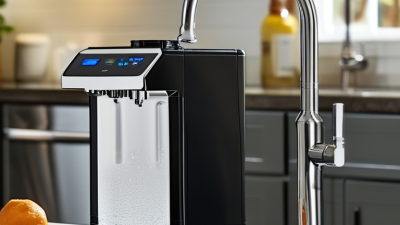
Under-sink systems use different methods, and the labels can blur their differences.
Compact ion-exchange units are the clearest choice for actual softening: resin exchanges calcium and magnesium ions for sodium or potassium. They need periodic regeneration, so check salt capacity, drain access, and replacement costs before buying.
NSF/ANSI 44 sets performance requirements for residential cation-exchange softeners; independent certification is more useful than a polished product description.
Template-assisted crystallization systems, often called salt-free conditioners, aim to limit mineral scale rather than remove hardness. The water may still test hard.
I would not assume otherwise from the word “softener.”
Under-sink reverse-osmosis systems can reduce hardness along with other dissolved substances, but they are filtration systems, not direct substitutes for every softener. Check tested reduction claims, daily output, and whether the system includes a storage tank.
The USGS classifies water with 121–180 milligrams per liter of calcium carbonate as hard, and water above 180 mg/L as very hard. That gives a useful benchmark for choosing capacity.
Test your tap water first. Then match the technology to the problem: scale on a kettle, spots on glasses, or a specific drinking-water concern.
Cabinet space is unforgiving. A small unit may need frequent regeneration, and that trade-off is easy to overlook.
A useful under-sink softener should match your water, not just fit beneath the cabinet. Start with a laboratory or municipal water report, then compare hardness, iron, and daily water use. The USGS classifies water above 180 milligrams per liter as calcium carbonate as very hard; 121–180 mg/L is hard. That gives you a practical baseline. Still, a single number can miss local variation. Test the cold tap you actually drink from.
Check rated capacity, service flow, and how the unit handles regeneration. A small system may soften water effectively but struggle when several taps run. Look for independently certified performance, such as testing to NSF/ANSI 44 for residential cation-exchange softeners, and verify exactly what the certification covers. The Water Quality Association has reported that roughly 85% of U.S. homes have hard water, but that broad estimate cannot predict your household’s needs. Read the fine print.
Also compare salt use, wastewater, replacement media, and installation clearances. Measure the cabinet depth, including hoses and shutoff valves; the product dimensions alone may mislead. Ask whether the system treats only one faucet or supplies multiple fixtures. I would not choose by advertised capacity alone. Actual performance depends on incoming water and usage, and those details are easy to overlook.
Top 10 Under-Sink Water Softeners for 2026 Compared
Comparing ten under-sink water softeners means looking beyond cabinet size. Check each unit’s rated flow, hardness capacity, and service interval. A compact system may fit neatly beside a waste bin, yet need frequent salt refills in a hard-water home. Measure the available space, including room to change cartridges or refill the brine tank. Small detail. Big difference.
Look for clear performance data and installation requirements. Ion-exchange systems remove hardness minerals, while salt-free conditioners generally reduce scale formation without softening water in the same way. The distinction matters if you want fewer spots on a kettle or softer-feeling water. Check whether the unit needs a drain, electricity, or a separate faucet. Also compare replacement media costs, not just the purchase price. I would treat vague capacity claims cautiously; household use and incoming water hardness can change real-world results.
A reliable comparison should state what each system is designed to treat and how often it needs maintenance. Consider testing your tap water before choosing. A simple hardness reading gives a more useful starting point than guessing from cloudy glassware. Some installation guides look easy until pipes sit close to the cabinet wall. That part can be frustrating, and not every compact unit will suit every kitchen.
| Rank | System configuration | How it works | Actually reduces hardness? | Regeneration or waste | Typical upkeep | Best suited for |
|---|---|---|---|---|---|---|
| 1 | Compact ion-exchange softener | Exchanges hardness minerals, mainly calcium and magnesium, for sodium or potassium ions. | Yes | Resin requires regeneration with brine; produces a concentrated drain stream. | Refill salt or potassium chloride and follow the unit’s regeneration schedule. | A dedicated drinking-water tap where measurable softening is needed. |
| 2 | Metered compact ion-exchange system | Uses ion exchange and initiates regeneration according to measured water use or estimated capacity. | Yes | Uses regeneration brine and a drain connection; water use depends on design and settings. | Replenish regenerant and check the meter, settings, and brine components. | Households seeking softening with regeneration linked to water use. |
| 3 | Timer-controlled compact ion-exchange system | Softens water with resin and regenerates on a preset schedule. | Yes | Requires brine regeneration and a drain; scheduled cycles may not match actual use as closely as metered systems. | Maintain regenerant and periodically review the schedule and system condition. | Installations where a simple, preset regeneration schedule is preferred. |
| 4 | Dual-cartridge ion-exchange system | Passes water through replaceable resin cartridges that exchange hardness ions. | Yes, until resin capacity is exhausted | Spent cartridges are replaced rather than regenerated on site; disposal requirements vary. | Replace cartridges according to capacity, water hardness, and the manufacturer’s instructions. | Users who want cartridge-based operation and do not want to handle regeneration salt. |
| 5 | Ion-exchange softener with sediment prefilter | A sediment filter captures suspended particles before water reaches the softening resin. | Yes | Resin regeneration produces brine wastewater; the prefilter itself does not soften water. | Replace the sediment cartridge as needed and maintain the softener’s regenerant supply. | Water with visible sediment or particles, subject to the system’s stated limits. |
| 6 | Ion-exchange softener with carbon prefilter | Combines a carbon stage for certain taste- and odor-causing substances with resin for hardness removal. | Yes | The resin needs regeneration or replacement; carbon filtration does not remove all contaminants. | Replace carbon media as directed and maintain the resin stage. | Users seeking hardness reduction along with improved taste or odor. |
| 7 | Reverse-osmosis drinking-water system | A semipermeable membrane reduces many dissolved substances, including hardness minerals, from the treated water. | Reduces hardness in product water; not a conventional whole-water softener | Produces a reject-water stream; the amount varies by system, pressure, and operating conditions. | Replace prefilters and membrane according to instructions; sanitize when required. | Point-of-use drinking water where broader dissolved-solids reduction is desired. |
| 8 | Reverse osmosis with remineralization stage | RO reduces dissolved minerals; a downstream stage adds selected minerals back to the treated water. | Reduces hardness in product water; remineralization may change its final mineral content | Produces reject water; reject ratio is system- and condition-dependent. | Maintain prefilters, membrane, and remineralization cartridge as specified. | Users wanting RO treatment with a post-treatment mineral stage. |
| 9 | Template-assisted crystallization conditioner | Encourages dissolved hardness minerals to form microscopic crystals intended to be less prone to sticking to surfaces. | No; it does not remove hardness minerals | Usually does not use salt regeneration; performance depends on water chemistry and operating conditions. | Replace conditioning media according to the specified service life and water conditions. | Scale-management goals where a reduction in measured hardness is not required. |
| 10 | Magnetic or electronic scale conditioner | Applies a magnetic or electrical field as a scale-control approach; results can vary with water chemistry and installation. | No; it does not remove hardness minerals | Typically no brine regeneration or reject-water stream; effectiveness is not equivalent to ion exchange. | Check the device and power supply, if applicable, and follow installation guidance. | A low-maintenance scale-control trial when actual softening is not the requirement. |
| Comparison note: Rows describe system configurations, not specific products or independently tested rankings. Under-sink units treat only water routed through them; they do not soften an entire home’s water supply. Confirm rated flow, capacity, pressure limits, drain requirements, and certifications for any specific model. A water test can establish hardness and help determine whether true ion-exchange softening is needed. | ||||||
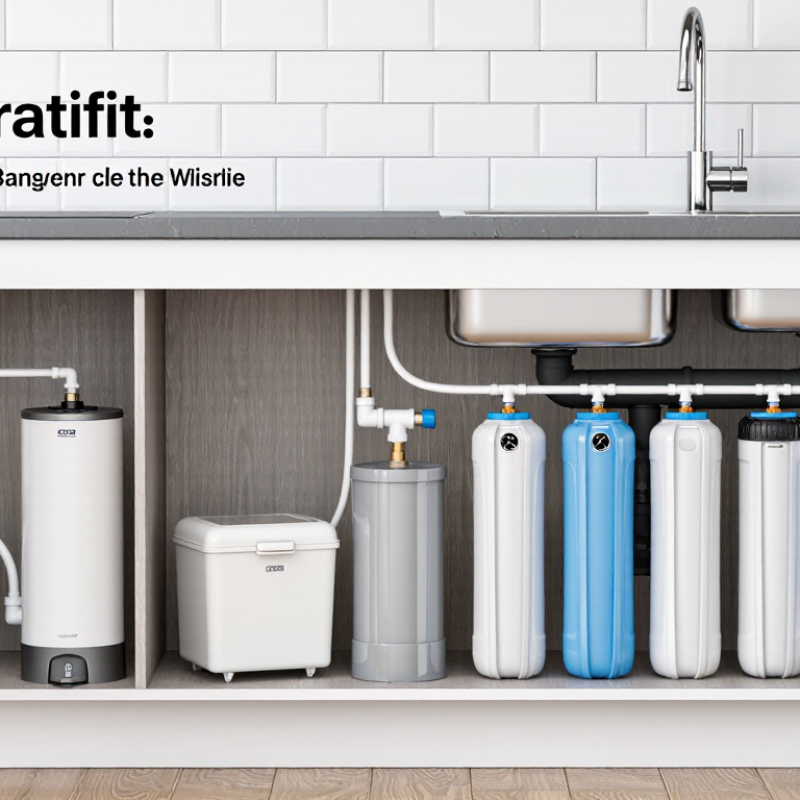
A compact under-sink softener needs more than a clear spot beside the filter. Measure cabinet height and depth, including room to lift the lid or change cartridges. Check pipe size, shutoff access, and whether the unit needs a drain or power outlet. A simple hardness test can help match capacity to household use. Too small, and regeneration may become frequent. Tight cabinet? Measure twice.
During installation, follow the supplied flow direction and keep fittings accessible for inspection. After turning the water back on, dry each connection and check again several minutes later. A small drip can hide behind stored cleaning supplies. If plumbing changes are unfamiliar, a qualified installer can reduce the risk of leaks or poor flow. Local requirements may also affect installation.
Maintenance is easy to overlook. Refill salt only when the system calls for it, and use the type specified in its instructions. Clean the brine tank and replace filters or cartridges on the recommended schedule. Keep a note of service dates; memory is not a maintenance plan. If water becomes hard again, check settings, salt bridges, and flow before assuming the resin has failed. Persistent changes in taste, pressure, or softening performance may signal a worn component. Compare repair costs with replacement, since compact systems can be difficult to service once parts become unavailable.