How to Choose Film Faced Plywood in 2026?

Choosing Film Faced Plywood in 2026 requires more than comparing surface color and price. Construction sites demand panels that resist moisture, repeated loading, and dimensional movement. A glossy face may look impressive, but appearance alone proves little. The plywood core, adhesive system, veneer quality, and edge sealing determine practical performance.

Recent evidence supports a careful buying process. The FAO Forestry Production and Trade database tracks continuing global demand for wood-based panels, including plywood, across construction markets. The FAO and UNECE Forest Products Annual Market Review also highlights supply volatility, timber costs, and changing trade conditions. These factors can affect availability, lead times, and product consistency in 2026. Buyers should request technical datasheets, production-batch information, and independent test results. EN 13986, EN 636, and relevant formaldehyde-emission requirements provide useful reference points, depending on the intended application and country.

Think about the jobsite. A concrete formwork panel may face wet cement, release agents, crane handling, and repeated stripping. Check thickness tolerance, bending strength, water resistance, film weight, and the number of declared reuses. Ask whether the manufacturer uses certified timber, such as FSC-certified material, when responsible sourcing matters. Certification supports traceability, but it does not replace performance testing. That distinction is easy to miss.

Some product claims remain difficult to compare. “Reusable” is not a universal measurement. Actual reuse depends on design, cleaning, storage, and workmanship. Therefore, buyers should inspect samples, test edge sealing, and compare total cost per use rather than purchase price alone. A cheaper sheet may become expensive after one damaged pour. Reliable selection combines documented standards, supplier experience, and honest evaluation of site conditions.
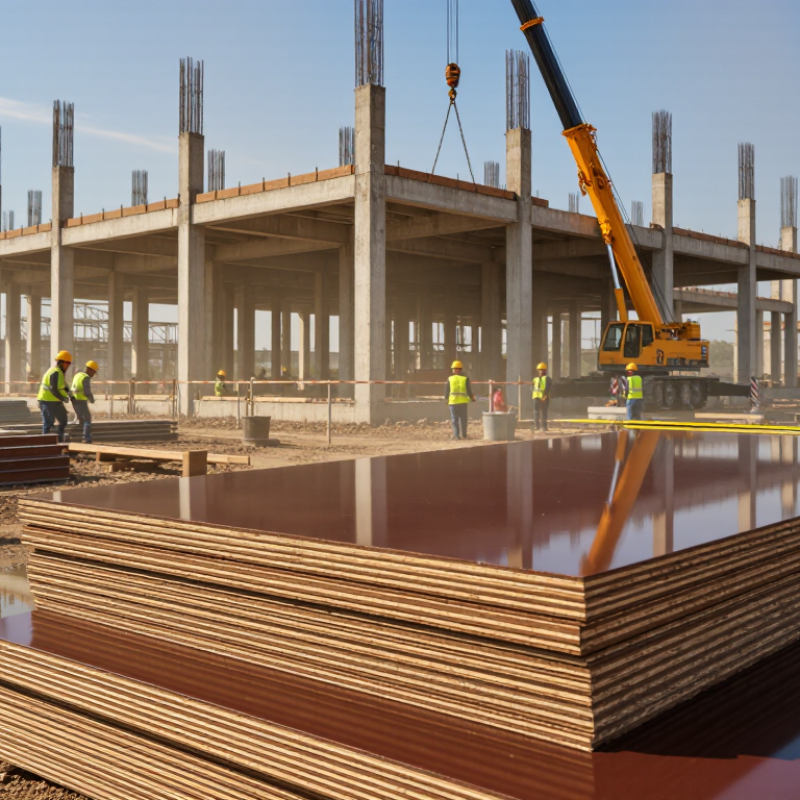
How to Choose Film Faced Plywood in 2026?

Define Film Faced Plywood by EN 636 and EN 314 Bond Classes

Choosing film faced plywood in 2026 should begin with the substrate, not its glossy surface. EN 636 classifies plywood by moisture exposure. EN 636-1 suits dry interiors. EN 636-2 suits humid conditions. EN 636-3 targets exterior exposure. EN 314-2 adds bond performance. Class 1 is for dry conditions. Class 2 covers humid use. Class 3 supports exterior exposure. These classifications describe the plywood core. The film improves release and surface protection. It does not upgrade a weak bond class.

Demand makes this distinction practical. FAO’s Global Forest Products Facts and Figures 2023 reports roughly 390 million m³ of wood-based panels produced worldwide in 2022. That figure includes many panel types, not only film faced plywood. The UNECE/FAO Forest Products Annual Market Review 2023–2024 also reports softer construction demand in several markets. Buyers may accept cheaper specifications under pressure. Resist that shortcut. A Class 1 panel with a waterproof-looking face remains unsuitable for repeated rain.

Specify both codes on the purchase order. For exterior work, request EN 636-3 and EN 314-2 Class 3. Ask for a current test report. Check core gaps, veneer thickness, edge sealing, film weight, and press marks. A 1.2-metre sheet edge should not show open voids or loose plies. Store sheets flat, covered, and above standing water. Small details matter. A certificate may cover one production batch, not every shipment. That limitation deserves honest review before concrete pressure and site weather are judged.

Check Core Species, 550–700 kg/m³ Density, and 7–21 mm Thickness

Choosing film faced plywood in 2026 starts with the core, not the dark surface. Core species affect strength, screw holding, weight, and edge stability. Birch usually offers a fine, uniform structure. Poplar is lighter and easier to handle. Eucalyptus can provide useful strength when veneers are well bonded. Mixed hardwood cores may work, but their quality can vary between panels.

Check the density carefully. A practical range is 550–700 kg/m³. Lower-density panels are easier to lift, yet their edges may crush under repeated fastening. Higher-density panels often resist impact better, but they add weight to every sheet. Ask for test data and confirm whether the measurement uses dry or conditioned plywood. Moisture changes the result.

Thickness should match the support spacing and expected load. Options from 7 to 21 mm cover many temporary and permanent applications. Thin 7–9 mm sheets suit light-duty lining and small forms. Panels around 12–15 mm offer a useful balance for general construction. Thicknesses from 18–21 mm are safer for wider spans, but only with proper support. Measure the sheet edge with calipers. It is a small step.

Inspect the cut edges for open gaps, overlapping veneers, or dark glue lines. Pressing a corner by hand can reveal weak bonding. I have seen attractive surfaces hide uneven cores. That mistake is easy to make. Check several sheets, not just one sample. The best specification on paper still needs honest site inspection.

How to Choose Film Faced Plywood in 2026?

Check core species, 550–700 kg/m³ density, and 7–21 mm thickness.

Typical core density varies by wood species. Poplar and pine are lighter, while eucalyptus and birch generally provide higher density and stiffness. For demanding formwork, select a core close to 550–700 kg/m³ and match the thickness to the required span: 7–9 mm for light-duty panels, 12–15 mm for general applications, and 18–21 mm for higher load or repeated-use conditions. Actual density may vary with moisture, veneer quality, and manufacturing tolerances.

Compare Phenolic Film Weights from 120–220 g/m² for Reuse Needs

Choosing film faced plywood in 2026 requires more than checking thickness and price. Phenolic film weight, measured in grams per square metre, strongly affects surface protection and reuse potential. Common options range from 120 to 220 g/m².

A 120 g/m² film suits lighter work, such as small slabs or short interior projects. It usually costs less, but repeated stripping may expose the wood sooner. The surface can show scratches after rough handling.

I would not select it for demanding, multi-cycle formwork.

A 160 or 180 g/m² film offers a practical balance. It handles normal moisture, concrete contact, and careful cleaning more reliably. For larger projects, 220 g/m² provides a tougher barrier and better edge protection.

However, heavier film does not automatically guarantee more uses. Core quality, panel pressing, sealing, storage, and release-agent control matter just as much. A poorly sealed edge can absorb water during one rainy shift. That detail is easy to miss.

Before ordering, request film weight, core composition, thickness tolerance, and bonding information. Test several sheets through actual pouring and stripping conditions. Record surface wear after each cycle.

My own preference is often 180 g/m², but that choice can be wrong for abrasive sites or careless handling. Reuse estimates should remain flexible, because temperature, concrete mix, cleaning tools, and worker technique change the result.

Look closely at corners and bolt holes. Small damage there often becomes the first failure point.

Verify E1 Formaldehyde Emissions at ≤0.124 mg/m³ Before Purchase

How to Choose Film Faced Plywood in 2026?

Verify E1 Formaldehyde Emissions at ≤0.124 mg/m³ Before Purchase

Film faced plywood should be judged beyond its dark, smooth surface. The coating helps resist moisture, but it does not prove low formaldehyde emissions. Ask for a recent E1 test report showing emissions at or below 0.124 mg/m³. The report should identify the panel thickness, production batch, test method, and laboratory.

Check the testing details carefully. A reliable report usually names the chamber method, test date, sample conditioning, and laboratory accreditation. Ask whether the result applies to the exact plywood you will receive. A document for another thickness may not be enough. Small differences matter.

Look at the edges, too. Freshly cut plywood can release a noticeable adhesive smell. That smell is not a formal measurement, but it deserves attention. Request a sealed sample before placing a large order. Store it in a ventilated area, then inspect warping, delamination, and surface damage. A clean-looking sheet can still fail the emissions requirement.

I once focused too much on film quality and overlooked the core adhesive. That was a useful mistake. The film looked excellent, yet the paperwork was incomplete. Do not accept vague claims such as “eco-friendly” without measured evidence. Also confirm whether local building rules require a different testing procedure. E1 is a strong purchasing reference, not a substitute for project-specific verification.

Match Panel Size, Edge Sealing, and Deflection Limits to the Project

How to Choose Film Faced Plywood in 2026?

Choose the panel size from the formwork layout, not from habit. A larger sheet can reduce joints and concrete marks. However, it may need two workers for safe handling. Check wall heights, column widths, lifting access, and cutting waste before ordering. A small mismatch can create many narrow strips. Those strips often move more during placement.

Edge sealing deserves equal attention. Inspect every cut edge for exposed core layers, gaps, or uneven coating. Proper sealing slows moisture entry during repeated pours, but it cannot repair poor storage. Keep panels flat, raised from wet floors, and protected from direct rain. I once focused too heavily on the surface film. The edges failed first. That decision still influences my inspections.

Tips: Confirm the required panel dimensions with the site drawing. Ask for thickness tolerance, core construction, and edge-treatment details. Then calculate deflection for the actual span, load, and support spacing. Do not rely only on a supplier’s general load table. The acceptable limit may depend on the concrete finish and project specification. A panel that carries the load may still bend visibly. If the limit is unclear, have a qualified engineer verify it. Test a sample panel when the project repeats many pours. Small trials can expose swelling, fastener damage, or unexpected bending before full installation.

How to Choose Film Faced Plywood in 2026? - Match Panel Size, Edge Sealing, and Deflection Limits to the Project

Use the matrix below as a practical screening guide. Final selection should be checked against the actual load, support spacing, moisture exposure, applicable building code, and the plywood supplier’s declared technical data.

Film Faced Plywood Selection Matrix — Nominal Panel Dimensions and Project Criteria
Project application Recommended nominal panel size Typical thickness range Panel layout and support spacing Recommended edge sealing Deflection limit for preliminary design Selection priorities
Concrete wall formwork 1,220 × 2,440 mm or 1,250 × 2,500 mm 12–18 mm Install the long direction parallel to the primary walers where practical. Keep unsupported panel edges fully supported or back-blocked. Seal all cut edges, drilled holes, and exposed end grain before first use. Re-seal damaged areas after stripping. Normally limit visible face deflection to approximately L/360 under the design fresh-concrete pressure. High face durability, stable thickness, clean release surface, sealed edges, and adequate support behind joints.
Concrete slab and beam formwork 1,220 × 2,440 mm or 1,250 × 2,500 mm 18–21 mm Use the panel span across closely spaced joists or bearers. Stagger joints and avoid four panel corners meeting at one location. Seal every perimeter edge and cutout. Apply a compatible form-release treatment to the film surface when required by the formwork system. Use L/360 as a common starting criterion; use L/480 where a flatter concrete finish or sensitive architectural surface is required. Panel thickness, bending stiffness, joint alignment, bearer spacing, and resistance to repeated wetting and stripping.
Temporary outdoor construction platforms 1,220 × 2,440 mm 18–21 mm Orient the stronger panel direction across the supports when the supplier provides directional structural data. Provide support at all panel edges. Use a durable coating or compatible edge sealer on all edges. Do not rely on the film face alone to protect exposed cut edges. For walking surfaces, a preliminary target of L/360 is commonly used; verify concentrated loads and local safety requirements separately. Slip resistance, wet-service durability, fastener holding, drainage, edge protection, and inspection frequency.
Reusable formwork with frequent stripping cycles 1,250 × 2,500 mm 18–21 mm Use larger panels to reduce the number of joints only when handling equipment and site access can safely accommodate them. Factory-sealed edges are preferred. Seal every field cut immediately; replace panels with crushed corners, open plies, or delaminated edges. Target approximately L/360 or stricter when surface finish requirements are high. Number of reuse cycles, moisture resistance, film adhesion, edge integrity, stripping method, and storage conditions.
Interior partitions and temporary enclosures 1,220 × 2,440 mm 9–12 mm Use vertical framing at regular intervals and support panel joints. Thinner panels require closer framing to control bowing. Seal edges where cleaning water, humidity, or repeated handling is expected. Interior dry locations may need less protection. Use approximately L/360 for surfaces receiving rigid finishes; confirm the finish manufacturer’s limit. Weight, ease of cutting, screw retention, appearance, fire requirements, and compatibility with the framing system.
Vehicle floors and heavy-duty transport decks 1,220 × 2,440 mm or project-specific cut sizes 18–25 mm Support panel joints, protect exposed perimeter edges, and design for wheel, pallet, or point loads rather than uniform load only. Seal all edges and penetrations with a moisture-resistant system. Add mechanical edge protection where impact is likely. Use approximately L/360 for general service; evaluate local indentation and vibration in addition to global deflection. Point-load resistance, abrasion, wet-dry cycling, fastening details, impact damage, and replaceability.
Exterior temporary sheathing under protected conditions 1,220 × 2,440 mm or 1,250 × 2,500 mm 12–18 mm Maintain required gaps and provide framing support around openings, panel ends, and corners. Do not use as permanent weatherproofing unless approved for that purpose. Seal all edges, especially bottom edges and openings exposed to splash water. Cover panels and provide drainage during storage and installation. Use the structural design limit required by the framing system; L/360 is a common serviceability starting point for finish-sensitive assemblies. Exposure duration, water management, fastener spacing, wind suction, panel orientation, and compatibility with the permanent cladding.

Important: L/360 and L/480 are serviceability criteria, not universal legal requirements. The allowable pressure, span, and deflection of a specific film faced plywood panel depend on veneer grade, layup, grain direction, thickness, moisture condition, support spacing, load duration, and the manufacturer’s tested values.

Common nominal sizes shown: 1,220 × 2,440 mm is approximately 4 × 8 ft, and 1,250 × 2,500 mm is a common metric format. Actual finished dimensions, thickness tolerances, film weight, bond classification, and edge-sealing method should be confirmed before purchase.