How to Choose the Best No Salt Water Softener for Your Home?
Choosing a no salt water softener can be overwhelming. Many options exist on the market, each with unique features. Understanding your water needs is crucial.
Consider your home's water hardness. Test your water to determine its mineral content. This knowledge helps identify the right no salt water softener for you. Look for one that fits your budget and space. Some models are compact, while others require more room.
It's also vital to consider the maintenance involved. Some systems need regular monitoring, while others operate almost entirely on their own. Each choice has its pros and cons. Reflect on what works best for your lifestyle. Ultimately, the ideal no salt water softener should simplify your life, but finding it may take time and effort.
Understanding the Basics of Water Softening Without Salt
Water softening is crucial for households facing hard water issues. Traditional systems often rely on salt to eliminate minerals like calcium and magnesium. However, salt-free systems offer an alternative approach that is gaining interest. According to the Water Quality Association, approximately 85% of U.S. homes have hard water, making effective solutions essential.
Salt-free softeners employ various technologies, such as template-assisted crystallization. This method converts hard minerals into microscopic crystals that flow with the water. Importantly, these systems don't remove minerals but change their structure. This allows them to prevent scaling in pipes and appliances. A report by the National Sanitation Foundation indicates that over time, using salt-free methods can extend the lifespan of plumbing fixtures.
Drawbacks exist in using salt-free systems. They might not completely resolve severe hardness issues. Some users note that water feels different compared to traditional softening. It's essential to weigh these factors. A careful analysis of hard water levels and household needs is vital. Not every solution works for everyone. A customized approach can ensure optimal results without relying on salt.
Key Factors to Consider When Choosing a No Salt Water Softener
When selecting a no salt water softener, consider key factors carefully. Size matters. The system must match your household's water usage. A unit that is too small may not soften water effectively. On the other hand, a large system could waste resources and be inefficient. Calculate your daily water needs to find a suitable size.
Consider the type of technology used in the softener. Some models utilize advanced filtration media while others offer simple methods. Understanding the technology helps you determine which option best meets your needs. Additionally, be aware of maintenance requirements. Some systems need regular filter changes. Others may require periodic cleaning.
Tips: Check reviews for real user experiences. They can offer insights into performance. Also, look for warranties. A longer warranty often indicates reliability. Pay attention to installation requirements too. Some systems are more complex. You might need a professional for setup. Choose wisely to avoid future hassles.
How to Choose the Best No Salt Water Softener for Your Home? - Key Factors to Consider When Choosing a No Salt Water Softener
| Feature |
Description |
Pros |
Cons |
| Type of System |
No salt water softeners use a variety of methods, such as ion exchange or magnetic treatment, to condition water without salt. |
Eco-friendly, suitable for low-sodium diets, less maintenance required. |
May not be effective for very hard water, limited options available. |
| Cost |
Prices can vary widely depending on the type and features of the softener. |
Generally lower operating costs due to no need for salt refills. |
Initial purchase price might be higher than traditional softeners. |
| Maintenance |
Check filters and other components regularly for optimal performance. |
Lower maintenance requirements overall compared to salt-based systems. |
Occasional need to replace filters can incur costs. |
| Water Quality |
Effectiveness can depend on water hardness and existing contaminants. |
Can improve taste and reduce scaling in pipes. |
Might not completely remove all impurities. |
| Size and Capacity |
Choose a size appropriate for your household's water usage. |
More options available for different household sizes. |
Larger systems can be more expensive and take up more space. |
Types of No Salt Water Softeners and Their Effectiveness
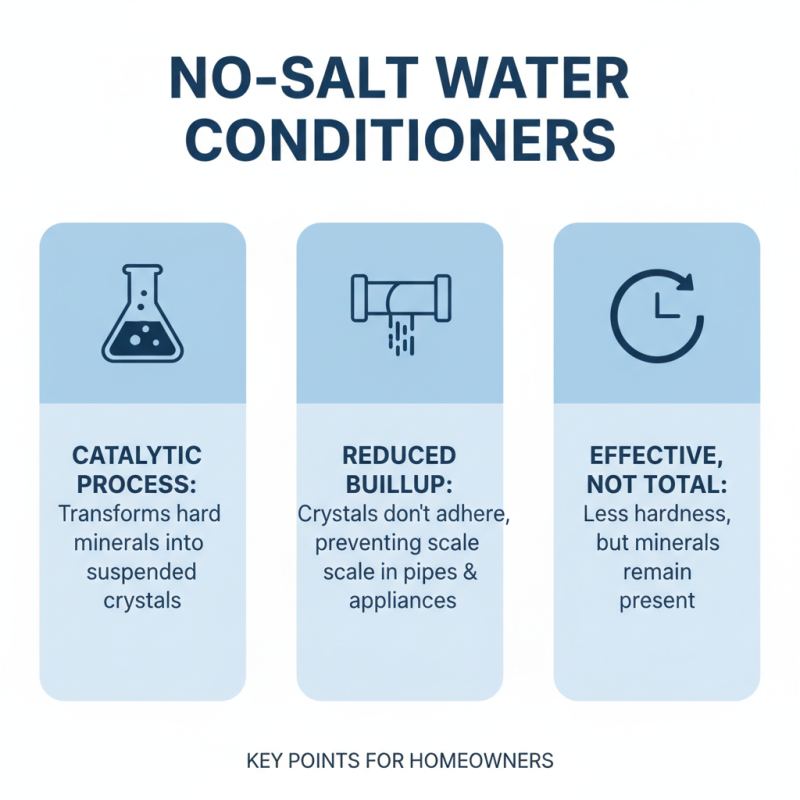
When considering no salt water softeners, it's important to understand the different types available. Most commonly, catalytic water conditioners use a process to change hard minerals into crystals. These crystals cannot stick to surfaces, reducing buildup in pipes and appliances. They are effective but may not completely eliminate hardness.
Another option is the reverse osmosis system. This system filters water at a molecular level. It removes various impurities, including minerals that cause hardness. While it is quite effective for drinking water, it may not be practical for entire home use. Its installation can be complex, and maintenance may require professional assistance.
Some people find that magnetic or electronic descalers offer a simple solution. These devices claim to alter the physical properties of hard water. However, results can be mixed. Many users report minimal effects, leading to skepticism about their effectiveness. Choosing the right system depends on your household needs. Evaluating these options with care can lead to better decisions for your home.
Installation and Maintenance Tips for No Salt Water Softeners
Installation of no salt water softeners can be straightforward. Typically, they require less plumbing than traditional systems. Many units can be placed near the main water supply. Ensure the space is well-ventilated. This helps in preventing humidity buildup. A standard installation might take a few hours. However, some users struggle with specific setups, particularly in older homes.
Maintenance is crucial for optimal performance. Experts recommend checking the unit every few months. Look for any signs of mineral buildup. Regular cleaning can prevent issues. Some reports indicate that up to 20% of users experience clogging after just six months. It's essential to clean or replace filters per the manufacturer's guidelines. Neglecting maintenance can lead to reduced efficiency and costly repairs.
User feedback often highlights challenges in understanding system settings. Many find the instruction manuals unclear. A good practice is to keep a maintenance log. Documenting changes and checks can help track the system's performance. Some users suggest that visual aids or videos might make the learning process easier. Overall, being proactive in installation and maintenance can significantly impact lifespan and efficiency.
Cost Considerations and Long-Term Benefits of No Salt Systems
When considering a no salt water softener, cost is a critical factor. Initial investment varies widely. Some systems may seem more affordable, but hidden costs can add up. Installation fees, maintenance, and replacements should be foreseen. A detailed budget helps to avoid surprises later.
Long-term benefits of no salt systems are compelling. They improve water quality, protect appliances, and boost efficiency. Additionally, they reduce the need for cleaning products. Users often notice a decrease in soap usage. Skin feels softer, and hair looks shinier. However, not everyone experiences these benefits equally. Some might find the results less satisfying than expected.
It’s essential to assess your specific water conditions before investing. Different households have unique needs. Moreover, consider the space available for installation. Evaluate if you are willing to make adjustments. Such choices may impact overall satisfaction in the long run. Weigh the pros and cons carefully to make the best decision for your home.