What Are the Best Home Water Treatment Systems in China?
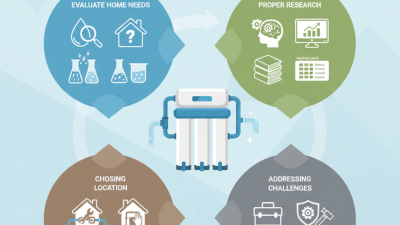
Choosing among home water treatment systems in China requires more than comparing filter brands or glossy purification claims. Water quality can differ sharply between cities, districts, and even apartment buildings. An older building may deliver clear water with an unpleasant chlorine smell, while a rural household may face sediment, hardness, or microbiological risks. The right system begins with evidence: a recent water test, local supply information, and a clear understanding of daily household needs.
This guide examines common options, including sediment filters, activated carbon units, ultrafiltration systems, reverse osmosis purifiers, and whole-house solutions. Each technology solves different problems. Reverse osmosis can reduce dissolved salts and certain contaminants, but it produces wastewater and needs regular membrane replacement. Activated carbon improves taste and odor, yet it cannot address every mineral or biological concern. Small details matter. Check certification documents, replacement-filter prices, installation space, water pressure, and after-sales service. A compact purifier under the kitchen sink may suit a couple, but a large family may need higher flow capacity.
There is no universal winner. That is worth remembering.
Reliable recommendations should reflect Chinese drinking-water conditions, manufacturer testing, and recognized safety requirements. Marketing language can sound convincing, but independent verification is stronger. Some buyers also overlook maintenance, allowing neglected filters to reduce performance instead of improving it. The best home water treatment systems are therefore practical, properly maintained, and matched to verified water problems—not selected only for advanced features or a premium price.
Water Quality Challenges and Treatment Needs in Chinese Homes
China’s household water quality varies widely between cities, districts, and villages. Older urban pipes may release rust-colored sediment after overnight stagnation. In some rural areas, wells can contain excess minerals, bacteria, or agricultural residues. Boiling kills many microorganisms, but it does not remove lead, hardness, or dissolved salts. That difference matters.
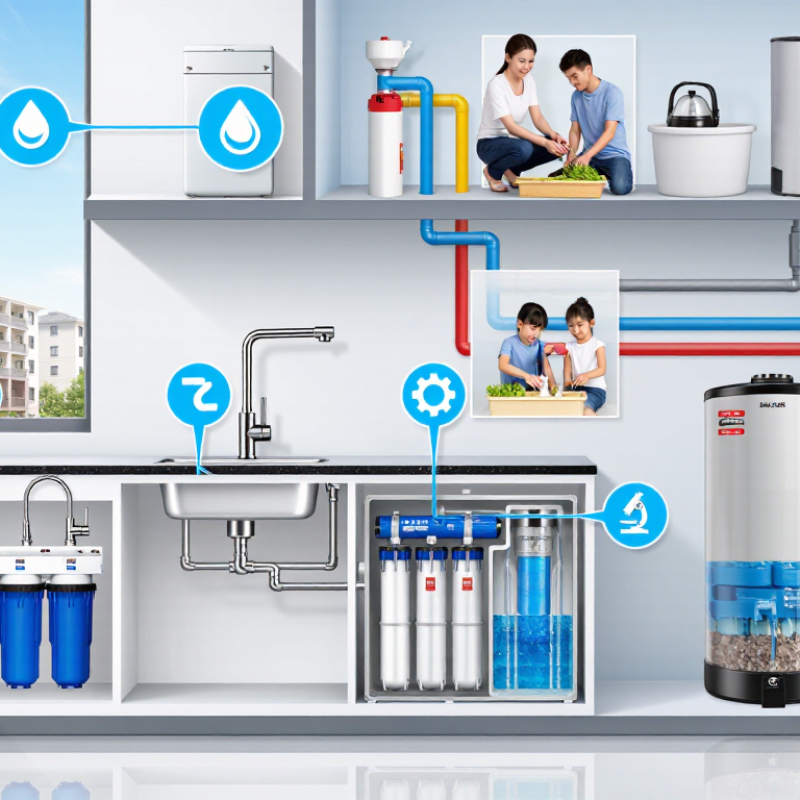
A practical home system should match tested water conditions, not advertising claims. Sediment filters can capture visible particles from aging pipes. Activated carbon can reduce chlorine taste, odors, and some organic compounds. Ultrafiltration is useful for many households, while reverse osmosis can reduce dissolved salts and certain metals. Ultraviolet treatment may help control microorganisms, but it requires clear water and reliable electricity. These technologies are not interchangeable.
An accredited laboratory test should guide the choice, especially for private wells. Ask for flow-rate data, replacement intervals, and independent safety certification.
Maintenance is where many systems fail. A neglected filter can become a dirty storage point rather than a protective barrier. Replacement dates should be recorded near the kitchen tap. Families should also inspect leaks, pressure changes, and unusual tastes.
Some households choose reverse osmosis without considering wastewater or mineral balance. I would not install it automatically. A smaller point-of-use system may be more practical for drinking water, while whole-house filtration may suit homes with severe sediment. Even good advice can miss local conditions.
Main Types of Home Water Treatment Systems Available in China
In China, home water quality can vary between cities, buildings, and even apartments. Municipal water may meet safety requirements, yet old pipes can add rust, sediment, or an unpleasant taste. A practical assessment starts with a basic water test and an inspection of the building’s storage tank. Guessing is often expensive.
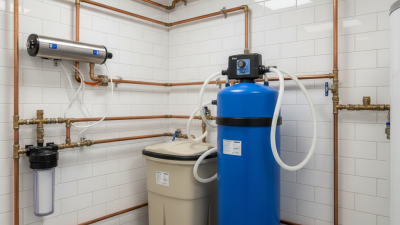
Sediment prefilters are useful near the main inlet. They capture visible particles before water reaches taps or appliances. Activated carbon filters reduce chlorine taste, odors, and some organic compounds.
Under-sink reverse osmosis systems remove many dissolved substances, including certain heavy metals and salts. They usually need electricity, replacement filters, and a drain connection. Wastewater is a real consideration.
Ultrafiltration systems retain useful minerals while reducing particles and some microorganisms, but they may not remove dissolved salts. Their performance depends heavily on membrane condition.
Whole-house softeners can reduce hardness that leaves white scale on kettles and shower glass. However, they do not replace disinfection or complete drinking-water treatment. Ultraviolet units can support microbial control, but clear water and steady maintenance are essential.
No system is perfect. A filter with a neglected cartridge may perform worse than expected. Households should check flow rate, certified testing data, replacement costs, and installation space. Filter changes should follow measured water use, not only calendar reminders. Some homes also need a different setup for drinking water and bathing water. That detail is easy to miss.
How to Match a Treatment System to Your Household Water
Choosing a home water treatment system in China starts with the water source, not the product catalogue. Municipal water may be safe but still carry chlorine taste, pipe sediment, or an earthy smell after storage. Well water can contain hardness, iron, manganese, or microbial risks. Test the water before buying equipment. Use a qualified laboratory when possible, and keep the report for comparison.
For a small apartment, an under-sink reverse osmosis system may suit drinking and cooking. It can reduce dissolved salts, but it produces wastewater and needs regular filter changes. A carbon filter is often enough for chlorine taste and odor. It does not remove every contaminant. A whole-house sediment filter helps protect showers, heaters, and washing machines from visible particles. It cannot solve hardness.
Hard water leaves white marks on faucets and makes soap feel less effective. A properly sized softener may help, but it requires space, maintenance, and careful discharge planning. Homes with private wells may need disinfection, iron removal, or a UV stage, depending on test results. Do not rely on clear water alone. It may still contain invisible problems.
Consider daily water use, kitchen space, drainage, electricity, and maintenance habits. A system that needs monthly attention may fail in a busy household. I would also check replacement availability and independent performance data, not just installation claims. Perfect matching is difficult. Household habits change, and water quality can vary by season.
Installation, Maintenance, and Operating Costs
What Are the Best Home Water Treatment Systems in China?
The best system depends on local water quality, apartment layout, and daily consumption. I have found that testing tap water first prevents expensive mistakes. A basic test should check hardness, chlorine, turbidity, iron, and microbial indicators. Under-sink reverse osmosis systems suit drinking water in many urban apartments. Whole-house filters work better when showers and washing machines also need protection. Some homes may need both.
Installation costs vary with plumbing access and water pressure.
A technician should inspect cabinet space before drilling anything. An under-sink unit usually needs a dedicated tap, drain connection, and nearby power socket. In older apartments, narrow pipes can complicate installation. Whole-house systems require more space and stronger floor support. Installation may cost several hundred to several thousand yuan, depending on labor and modifications.
Maintenance is often underestimated.
Sediment and carbon filters may need replacement every three to twelve months. Reverse osmosis membranes commonly last longer, but poor maintenance shortens their life. Electricity use is modest, yet rejected water can increase household consumption. Operating costs also include replacement filters, sanitizing, and occasional water-quality tests. A family of four may spend hundreds to over a thousand yuan yearly. These figures are only working estimates. Local prices differ. I once focused too much on purchase price and overlooked filter availability. That was a costly assumption. Choose a system with clear service records, accessible parts, and written maintenance instructions.
Safety Standards, Certifications, and Buying Considerations
Choosing a home water treatment system in China requires more than comparing flow rates.
China’s GB 5749-2022 drinking-water standard lists 97 indicators, including microbiological, chemical, and sensory requirements. The standard took effect in 2023. Check whether the system addresses contaminants relevant to your building, not every contaminant on a brochure.
Certification matters, but it is not a guarantee of safe installation.
Look for clear testing against applicable Chinese standards, such as GB 5749-2022 and material-safety requirements under GB 4806.1. For imported equipment, NSF/ANSI 42 or 53 testing can provide useful evidence, but certification scope matters. A filter certified for taste does not prove lead or bacteria reduction. Request the full test report, laboratory name, test date, rated capacity, and replacement interval. China’s National Health Commission and recognized testing institutions are more reliable references than anonymous marketplace claims.
Maintenance is where many systems fail.
The WHO/UNICEF Joint Monitoring Programme reported in 2023 that 2.2 billion people lacked safely managed drinking water globally in 2022. Household treatment still depends on clean storage and timely replacement. Watch for a damp cartridge, rising odor, or slower flow. I would not trust a bright touchscreen alone. A practical check includes measuring incoming and treated-water readings, while remembering that a cheap TDS meter cannot detect every hazard. Installation quality also deserves scrutiny. One loose tube can undermine an expensive filter. Some choices remain uncertain, especially when local building pipes are old, so buying records and periodic testing are worth keeping.