2026 Best Water Filtration Systems for Global Buyers

Choosing the best water filtration system in 2026 requires more than comparing prices, flow rates, or polished product photos. Global buyers face different water sources, regulations, climates, and household needs. A cartridge that performs well in a Canadian apartment may struggle with sediment-heavy groundwater in Southeast Asia or high chlorine levels in a European city.

The WHO and UNICEF Joint Monitoring Programme reported that 2.2 billion people lacked safely managed drinking water in 2022. This figure explains the growing demand for dependable water filtration, but it does not make every filter suitable for every location. The U.S. Environmental Protection Agency advises buyers to identify specific contaminants before selecting treatment equipment. That advice sounds simple. It is often ignored.

Rick Andrew, a water treatment specialist associated with NSF, has repeatedly emphasized a practical principle: “Know your water before choosing your treatment system.” Buyers should treat this as a starting point, not a slogan. Independent laboratory testing, recognized certifications, replacement-filter availability, and verified performance claims matter more than impressive marketing language. NSF/ANSI standards can help confirm whether a product is tested for lead, chlorine, microorganisms, or other contaminants.

This guide compares leading systems for homes, offices, hospitality projects, and remote applications. It considers installation, maintenance, operating costs, energy use, and regional support. Some conclusions remain imperfect, because water quality changes over time. A current laboratory report is still essential. Reliable filtration begins with evidence, not assumptions.

2026 Best Water Filtration Systems for Global Buyers

Water Filtration Systems: Definition, Purpose, and Main Categories

Water filtration systems are devices that improve water quality by removing or reducing unwanted particles, chemicals, minerals, and microorganisms. Their purpose depends on the source water and the user’s needs. A household may need safer drinking water, while a factory may require stable water for processing. In field assessments, I have seen clear water still contain dissolved contaminants. Appearance alone is not evidence of safety. No single filter removes everything.

The main categories include sediment filters, activated carbon filters, reverse osmosis systems, ultraviolet treatment, and softeners. Sediment filters capture sand, rust, and visible particles. Carbon media can reduce chlorine, odors, and some organic compounds. Reverse osmosis uses pressure and a membrane to reduce salts and many dissolved substances. Ultraviolet units target microorganisms but do not remove metals or sediment. Softeners mainly reduce hardness caused by calcium and magnesium. Choosing the wrong category wastes money. I once underestimated maintenance needs on a compact system, and performance declined quickly.

Tips: Test the water before buying equipment. Check laboratory results, flow rate, replacement intervals, and installation conditions. Match the system to local regulations and the actual contaminant profile. Keep a simple service record with filter dates and pressure readings. Certified testing is more reliable than online claims. Be cautious with vague “complete purification” promises.

How Water Filtration Systems Work: Key Technologies and Treatment Stages

How Water Filtration Systems Work: Key Technologies and Treatment Stages

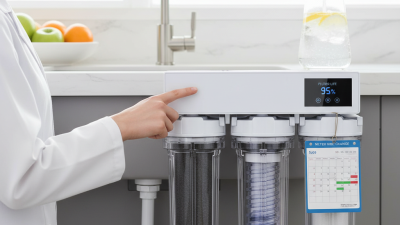
A water filtration system works through several treatment stages, each targeting a different contaminant. Sediment filters catch sand, rust, and visible particles. Activated carbon reduces chlorine, odors, and many organic compounds. The water may then pass through ultrafiltration, nanofiltration, or reverse osmosis membranes. These membranes remove smaller substances, including bacteria, salts, and some heavy metals. Ultraviolet treatment can deactivate microorganisms without adding chemicals. It does not remove sediment, though. A final mineral stage may improve taste, but it cannot repair poor upstream filtration.

Tips: Test the source water before choosing equipment. A kitchen tap and a private well need different solutions. Check flow rate, pressure, replacement intervals, and wastewater volume. Ask for independent performance data, not only sales claims. Keep a simple maintenance log. Record filter changes, pressure readings, and unusual odors. Small details matter.

Real installations often reveal an uncomfortable truth: the most advanced membrane can perform badly when prefilters are neglected. I have seen cloudy water appear after a cartridge was used too long. The problem was not the membrane itself. It was poor maintenance. Global buyers should compare local water conditions, electricity stability, temperature, and service access. Certification can support confidence, but it does not replace testing. Even accurate specifications may change under real household pressure. Expect some adjustment after installation.

Comparing Filtration Systems for Homes, Businesses, and Industrial Use

2026 Best Water Filtration Systems for Global Buyers

Homes, businesses, and factories need different filtration decisions. A household may prioritize taste, chlorine reduction, and compact installation. Activated carbon handles many taste and odor concerns, while reverse osmosis can reduce dissolved salts. It also creates reject water. That trade-off is often ignored.

The WHO Guidelines for Drinking-water Quality state that turbidity should ideally remain below 1 NTU to support effective disinfection. For homes, sediment prefilters, carbon, and ultraviolet treatment can suit relatively clean municipal supplies. However, private wells need laboratory testing first.

A cloudy glass, rising pressure loss, or metallic taste signals investigation, not automatic cartridge replacement. Mistakes happen.

Businesses face changing demand, tighter maintenance schedules, and longer pipe runs. A café may need stable flow during morning peaks, while an office may need point-of-use protection.

2.2 billion

The WHO and UNICEF Joint Monitoring Programme reported that 2.2 billion people lacked safely managed drinking water in 2022.

Local testing remains essential. Industrial users require higher flow, redundancy, automated monitoring, and treatment matched to process water. The UN World Water Development Report identifies agriculture as using about 70% of global freshwater withdrawals, increasing pressure on efficient reuse. Ultrafiltration, reverse osmosis, softening, and media filtration may work together, but pretreatment determines reliability. Energy use, membrane fouling, and concentrate disposal deserve equal attention. A technically impressive system can still fail when operators miss calibration or change intervals.

Global Buying Criteria: Water Quality, Capacity, Standards, and Maintenance

Choosing a water filtration system for global use starts with the water itself, not the product brochure. Test source water for turbidity, hardness, chlorine, lead, fluoride, nitrate, and microbial contamination. A high TDS reading does not identify every health risk. Local laboratory results provide stronger evidence than taste alone.

Capacity must match real demand, including peak periods. A household may need 300 to 500 liters daily, while a small facility may require several thousand. Check flow rate, storage volume, inlet pressure, and recovery rate. Undersized systems can produce slow water and frequent interruptions. Oversized systems may waste energy and occupy valuable space.

Standards deserve careful checking. Look for verifiable testing against relevant NSF/ANSI standards, WHO guidance, and the importing country’s requirements. Certification should cover the exact model and filter configuration. Maintenance is equally important. Record installation dates, pressure changes, cleaning work, and cartridge replacement. Keep spare parts available where shipping is slow. Neglected filters can reduce flow and create hygiene concerns.

Real-world use often exposes weaknesses. A system may perform well in a clean showroom but struggle with muddy seasonal water. That possibility deserves planning. Buyers should request performance data under similar conditions, not only laboratory results. Water quality can change after rain, construction, or source switching. A practical specification leaves room for testing, adjustment, and honest review.

2026 Best Water Filtration Systems for Global Buyers

Global Buying Criteria: Water Quality, Capacity, Standards, and Maintenance

System Type Primary Water-Quality Targets Typical Filtration Technology Typical Capacity Typical Recovery / Wastewater Common Applicable Standards Typical Maintenance Best-Fit Buyer Profile
Sediment + Carbon Point-of-Use Filter Reduces sand, rust, suspended particles, chlorine taste and odor; does not reliably remove dissolved salts or microorganisms unless specifically certified. Polypropylene or pleated sediment cartridge combined with activated carbon block or granular activated carbon. Approximately 1.9–3.8 L/min; suitable for one drinking-water tap. 100% water recovery because no reverse-osmosis reject stream is produced. Look for certified reduction claims under NSF/ANSI 42; particulate or health-effect claims may require additional certification. Replace cartridges commonly every 3–12 months, depending on water quality and usage; sanitize the housing during cartridge replacement. Municipal water users seeking better taste, odor and particle control at low purchase and operating cost.
Ultrafiltration (UF) System Reduces suspended solids, colloids, bacteria and protozoan cysts when the membrane and system are properly rated; generally does not remove dissolved salts. Hollow-fiber membrane with pore sizes commonly around 0.01–0.1 micrometres, often preceded by sediment and carbon filtration. Approximately 2–6 L/min for household point-of-use models. Usually near 100% recovery during normal operation; some models use periodic flushing. Performance claims should be supported by NSF/ANSI 53, NSF/ANSI 58, or an equivalent national standard where applicable; microbiological claims must be verified for the specific model. Replace prefilters every 6–12 months; clean or replace the membrane according to feed-water turbidity and manufacturer instructions. Areas with low-to-moderate salinity where users want microbial and particle reduction without RO wastewater.
Reverse Osmosis (RO) Point-of-Use System Reduces many dissolved salts, fluoride, nitrate, heavy metals, microorganisms and other contaminants, subject to membrane performance and pretreatment. Sediment prefilter, activated carbon prefilters, thin-film composite RO membrane and post-carbon filter; optional remineralization stage. Approximately 0.1–0.4 L/min production rate; commonly paired with a 6–12 L storage tank. Typical conventional systems recover about 20–35%; high-efficiency designs may achieve approximately 50–70% under specified conditions. NSF/ANSI 58 is the principal RO system performance standard; NSF/ANSI 42 and 53 may apply to prefilter or contaminant-reduction claims. Replace sediment and carbon prefilters about every 6–12 months; replace the RO membrane approximately every 2–5 years; sanitize the tank and tubing periodically. Homes, offices and hospitality sites dealing with high TDS, hardness-related taste, nitrate, fluoride or specific dissolved contaminants.
Whole-House Carbon Filtration Reduces chlorine, taste, odor and selected organic compounds; effectiveness depends on carbon type, contact time and contaminant concentration. Large-volume granular activated carbon vessel, usually preceded by a sediment prefilter. Approximately 19–76 L/min for residential systems, depending on vessel size and pressure loss. No routine reject water; some systems require periodic backwashing. NSF/ANSI 42 is commonly relevant for aesthetic chlorine, taste and odor reduction claims. Backwash where required; replace carbon media commonly every 2–5 years, depending on chlorine loading, flow and breakthrough testing. Buildings requiring treated water at multiple outlets, especially where chlorine odor affects bathing, laundry and general use.
Water Softener Reduces calcium and magnesium hardness to help limit scale; does not disinfect water or remove most dissolved contaminants. Cation-exchange resin regenerated with sodium chloride or, in some applications, potassium chloride. Approximately 11–76 L/min, depending on resin volume and inlet pressure. Uses regeneration water; a typical residential cycle may consume approximately 75–190 L, but actual usage varies substantially by design and hardness. NSF/ANSI 44 is commonly used for residential cation-exchange water softeners; local plumbing and discharge rules also apply. Add salt or regenerant as needed, clean the brine tank periodically and test hardness at the outlet; inspect the control valve annually. Hard-water regions where scale damages heaters, boilers, plumbing fixtures or washing equipment.
Ultraviolet (UV) Disinfection System Inactivates bacteria, viruses and protozoa when the required UV dose is delivered; does not remove chemicals, salts, particles or turbidity. Low-pressure UV lamp installed after sediment filtration; UV transmittance and turbidity strongly affect performance. Approximately 15–57 L/min for common residential units, subject to the validated dose and water quality. 100% water recovery; no chemical residual is added to the water. NSF/ANSI 55 is the key standard for residential and commercial UV microbiological water treatment systems. Replace the UV lamp generally every 9–12 months; clean the quartz sleeve and verify the alarm or intensity sensor regularly. Private wells, rainwater systems and other sources where microbiological risk is a concern and the water has already been clarified.
Iron and Manganese Removal Filter Targets dissolved or oxidized iron and manganese, which may cause staining, metallic taste, sediment and clogged fixtures. Oxidation media, catalytic media or aeration followed by filtration; selection depends on pH, concentration and iron form. Approximately 11–57 L/min for residential equipment; flow must be matched to media contact time. No continuous reject stream for some systems; backwash water is commonly discharged during cleaning cycles. NSF/ANSI 42 may apply to certified aesthetic contaminant-reduction claims; laboratory testing of source water is essential before selection. Backwash at the required interval, inspect injectors or air valves and replace or replenish media according to loading and water chemistry. Private wells with visible iron staining, black or brown deposits, metallic taste or elevated laboratory results.
Commercial RO Skid Reduces dissolved solids and many inorganic contaminants for process water, food service, laboratories and light industrial applications. Multistage pretreatment, cartridge filtration, high-pressure pump, one or more RO membrane vessels, control panel and storage tank. Approximately 0.5–50 m³/day for small and medium commercial installations; larger systems require engineered sizing. Commonly about 50–80% recovery, subject to feed-water chemistry, membrane configuration and scaling risk. Relevant requirements may include NSF/ANSI 58 for certified RO performance, local electrical and pressure-vessel rules, ISO 9001 manufacturing controls and applicable potable-water regulations. Monitor conductivity, pressure, flow and recovery; replace cartridges every 3–12 months; chemically clean membranes when normalized performance declines. Hotels, restaurants, clinics, food processors, laboratories and facilities requiring measurable, higher-volume low-TDS water.
Packaged Media Filtration Plant Reduces turbidity, suspended solids, color, iron or specific contaminants through selected media; treatment results depend on feed-water analysis and process design. Pressure vessels containing multimedia, sand, catalytic carbon, manganese dioxide or other engineered media, often with automatic valves. Approximately 1–100 m³/h for packaged commercial and institutional systems. No continuous reject stream; periodic backwashing can consume approximately 2–8% of treated-water volume, depending on media and loading. Designs may reference NSF/ANSI 61 for drinking-water system components, NSF/ANSI 42 for relevant aesthetic claims and local potable-water regulations. Backwash according to pressure differential or time, inspect valves and sample treated water; replace media commonly every 3–7 years depending on application. Schools, apartment buildings, factories, resorts and municipal or decentralized facilities needing higher flow and customized pretreatment.
Buyer note: Capacities and service intervals are typical planning ranges rather than guaranteed performance values. Final selection should be based on laboratory water analysis, peak flow, daily demand, pressure, temperature, local regulations, replacement-part availability and certified performance data for the specific configuration.

Installation, Operating Costs, Safety, and Long-Term Performance Evaluation

For global buyers, water filtration performance begins with installation, not the brochure. A site survey should check source-water pressure, temperature, pipe material, drainage, and available power. WHO’s Guidelines for Drinking-water Quality recommend risk-based controls from source to household, because one failed connection can compromise the final water. In 2022, 2.2 billion people still lacked safely managed drinking water, according to the WHO/UNICEF Joint Monitoring Programme. Local testing matters.

Installation errors are expensive. A reverse-osmosis unit may reject several litres of water for every litre produced. The U.S. Environmental Protection Agency reports that inefficient systems can discharge five gallons or more per gallon treated. Storage tanks also require space and sanitation. Keep records. Filter cartridges, membranes, seals, and ultraviolet lamps need scheduled replacement, even when water looks clear. The U.S. Centers for Disease Control and Prevention warns that poorly maintained devices can support microbial growth. Clean water is not automatically safe water.

Long-term evaluation should measure flow rate, pressure loss, rejection performance, electricity, replacement parts, and wastewater. Independent certification against relevant safety standards can strengthen purchasing decisions, but certification does not replace local verification. A 2024 Global Water Intelligence market review indicates continuing investment in decentralized treatment, yet projected market growth does not guarantee low ownership costs. Some systems run quietly for years. Others fail early because users ignore maintenance. That weakness deserves honest budgeting. Test the output after installation, after major servicing, and whenever taste or pressure changes.